Between 2011 and 2018, with short breaks, I organized meetups for Business Psychologists (and in the first years for Psychologists) in Düsseldorf. These meetups were informal gatherings at a workday evening mostly at Schlösser Quartier Bohème with around 8 to 20 people who enjoyed talking to peers and exchanging experiences.
HR Tech is a hot issue and a growing market, but what is missing apart those big and online conferences is a local, in-person and regular meetup for those who are working or interested in technology to support human resource management.
And as my focus was and is HR Tech and plays a crucial role today, I thought it is a good idea once again to organize local meetings to cover topics where HR Tech is fundamental or important like (Note: Some topics are obviously connected and overlapping):
People Analytics, HR Analytics, Workforce Analytics, HR Data Science
Educational Technology (EdTech)
Change Management,
Leadership, Communication, Motivation
Performance Management
Health Management
Retention Management
New Work, Remote Work
AI and GenAI in HRM
Robotics, Chatbots, Virtual Assistants
Ethics and Laws (like the new EU AI Act)
According to Gartner’s „2024 HR Technology Imperatives“ report, four specific areas stand out: Skills Management, Learning Experience Platforms, Internal Talent Marketplaces, and AI in Talent Acquisition.
And we can find more on their website about the state of HR Tech: „A recent Gartner survey reveals that 56% of HR leaders say their HR technology solutions and strategy do not match current and future business needs.“ (Source: Gartner, 2024)
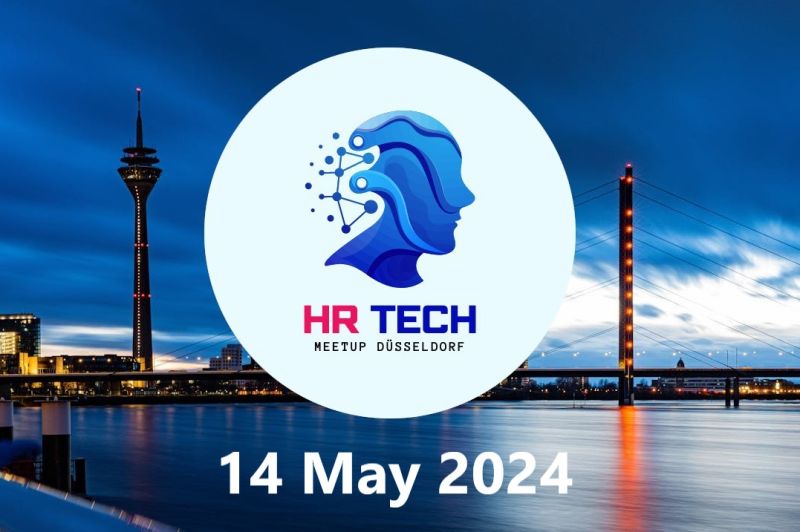
So, there is a lot of to talk about, to exchange thoughts and experiences about HR tech topics, to meet new people and get inspired! I hope you will join us on Tuesday, May 14, 2024 for the first edition of HR Tech Meetup Düsseldorf! The place and further information will be announced shortly – For now mark the day and block your evening if you want to be part of a new local group.
And please like, comment, or share my post if this appeals to you, and even if you can’t join on that day. After all: Such meetings only make sense if there is a sufficient readiness to take part. Plus: If you want to host or sponsor a meeting as a HR department of a company or a HR service provider with a presentation, contact me via a personal message. Thank you!
I wish you a good weekend and are looking forward for meeting you in person.
Stefan Klemens
PS: Want to exchange ideas on Human Resources, people analytics, digital assessment, or artificial intelligence in HRM? Then network, write a message and/or make an appointment for an online meeting. Or the classic way: phone call.
And: You like my work and the content I regularly share? Then I’m happy about a Like or comment on LinkedIn. Thank you! ? ?♂️?
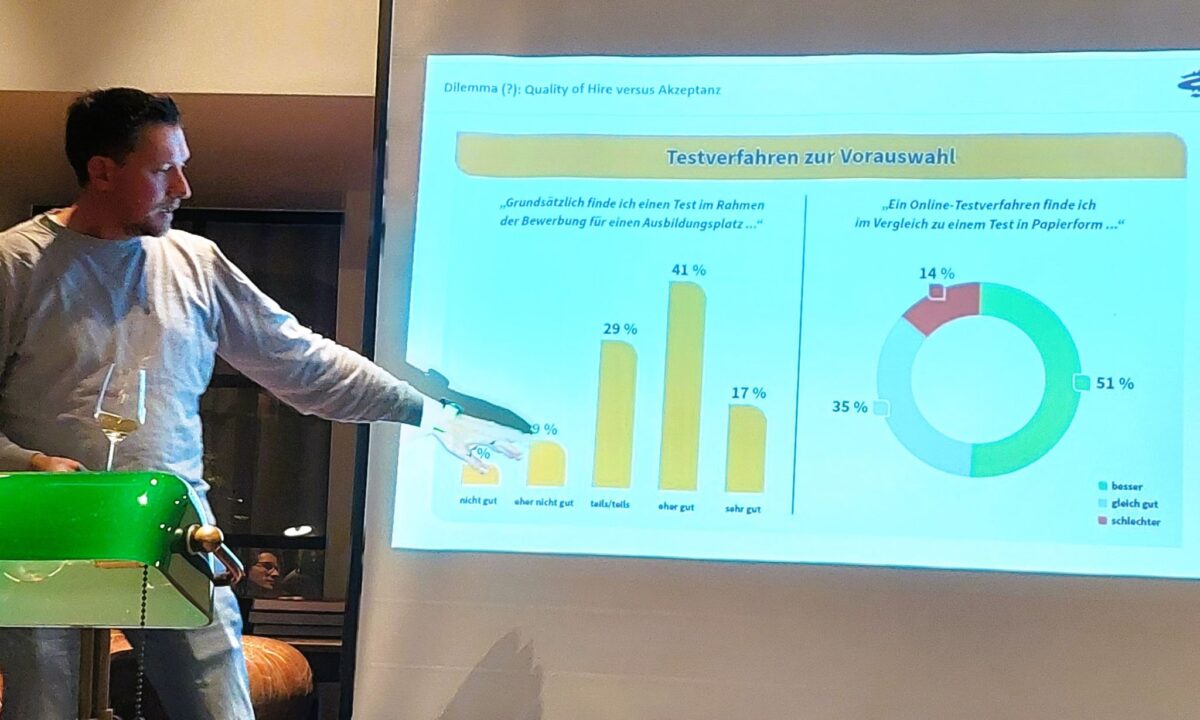
Jo Dierck from CYQUEST talking about the "Quality of Hire". Foto: Stefan Klemens
Dear visitor!
What is a „HireAbend“? Well, I assume you don’t know unless you have been to the first one (or heard about it) – like me who joined last week on Wednesday evening March 20, the HR recruiting crowd at Ruby Carl Workspaces in Düsseldorf.
Dimitri Knysch from video recruiting company Cammio and HR journalist & moderator Cliff Lehnen invited us to this new HR event to learn and discuss with special guest Jo Diercks from Cyquest about the „Quality of Hire“: An important key performance indicator (KPI) in recruiting (or the most important according to Jo).
Around 40 people came together in this lovely location from companies like Indeed, Thalia, Rheinische Post, talentsconnect, Advance Mobility Experts, and many others.
I wanted to write a review about it, but hadn’t had the time yet – and since there is already a very nice one online by Tim Stakenborg for F.A.Z.’s Personalwirtschaft, I will spend my time for some other task regarding HR, People Analytics, AI, or Digital Assessment.
Special thanks to Dominik Rühl, Tim Verhoeven, Christian Thun, Dimitri, Cliff, of course Jo, and some others for their input and our exiting talks before and after the event. And a big thank to the organizers for hosting it, drinks and food. Next topic for the HireAbend is already in the pipeline in June 2024: Azubi-Recruiting.
I will put some links at the end of this post for more information around this first and the upcoming second edition.
To sum up, HireAbend no.1 was a great evening for me, and I suppose for all participants: 3.5 hours flew by in a flash! I hope you enjoy to learn, meeting new people and talking to business friends as much as I, and I wish you a great next event – whatever it might be!
Until soon,
Stefan Klemens
Note: The photo shows Jo Diercks highlighting the result of a study that 58% of applicants think that online tests for preselection are very or rather good in his part on quality of hire and acceptance.
Links:
PS: Want to exchange ideas on Human Resources, people analytics, digital assessment, or artificial intelligence in HRM? Then network, write a message and/or make an appointment for an online meeting. Or the classic way: phone call.
And: You like my work and the content I regularly share? Then I’m happy about a Like or comment on LinkedIn. Thank you! ? ?♂️?
(d) For Azubi-Recruiting, the topic of the 2nd edition of „HireAbend“, I recommend strongly what u-form Testsysteme is offering: Contact Felicia Ullrich for more and check out https://www.testsysteme.de/
Image: Edited photo by Stefan Klemens of one of Frank Gehry's building (Neuer Zollhof) in the Düsseldorf Medienhafen.
Dear visitor!
As you know the speed of the world has increased dramatically and the world wide web and the smart phone were important drivers for it.
Technology has also established itself as you know human resources management althought a little time later than in marketing for example. But HR tech or digital HR are not new in organizations anymore, and People Analytics as you may no has established itself as a cross-function in at least big organizations (more or less HR data science).
To keep up with developments in HR tech and HR & People Analytics and get inpiration for your work it is a good idea to exlore the book market from time to time. This I have done these days for you and me: I have collected in this newblog article 15 new books that cover these hot HR topics and which were published since June 2023.
Please note: The list is ordered by publication date (day-month-year) backwards; Translations into English with deepl.com; Images are embedded from their original source; If no remark in the note regardin a work all textbooks are published as first editions.
And: I will write some words or maybe a review like this about one or more of the selected works in the future. So stay tuned and connect with me on LinkedIn or contact me to keep in touch. Can’t wait? Then take a look on my previous newsblogs article with more cool HR tech stuff.
Note: A table of content is available online on the website. Kogan Page will be publish the textbook in August 2024 according to their website.
About the author:
Kristin Saling is Director at the Innovation Cell for the United States Army Human Resources Command where she enables the command to capitalize on the latest HR business practices and technologies.
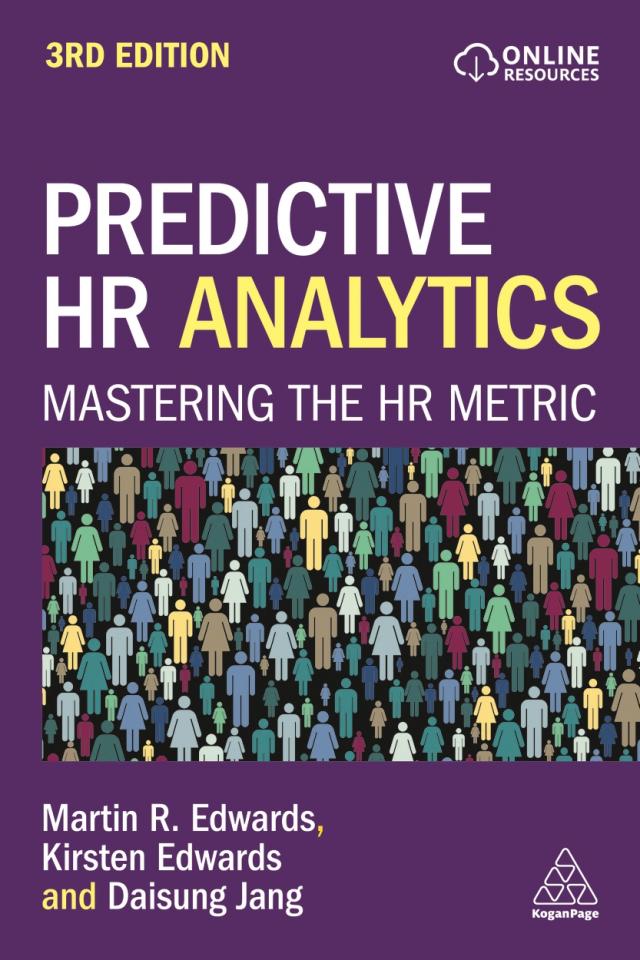
Note: A table of content is available online on the website. Kogan Page will be publish the textbook as the third edition in June 2024 according to their website.
About theauthors:
„Martin R Edwards is an Associate Professor in Management at UQ Business School, University Queensland, Australia.
Kirsten Edwards is HR Lead for Advanced Analytics and Data Science at Rio Tinto and has over 20 years‘ broad international experience in analytics, HR and management consulting, based in Queensland, Australia.
Daisung Jang has over 10 years‘ experience of data analysis and is an expert on R. He is a lecturer in UQ Business School, University of Queensland, Australia.“
Source: Publisher
#3: Creepy Analytics: Avoid Crossing the Line and Establish Ethical HR Analytics for Smarter Workforce Decisions
Note: Neither a book preview on the website is available, nor on Google Books. McGraw-Hill’s publishing date is shortly in one week as we read on its internet page.
About theauthor:
„Dr. Salvatore Falletta is a director and professor of Human Resource Leadership and Organizational Science at Drexel University. […] As a former chief human resources officer, head of Global HR Research and Analytics at a Fortune 100, and thought leader on this subject, Salvatore Falletta has witnessed first-hand the emergence of “creepy analytics” as a hot-button issue.“
Source: Publisher
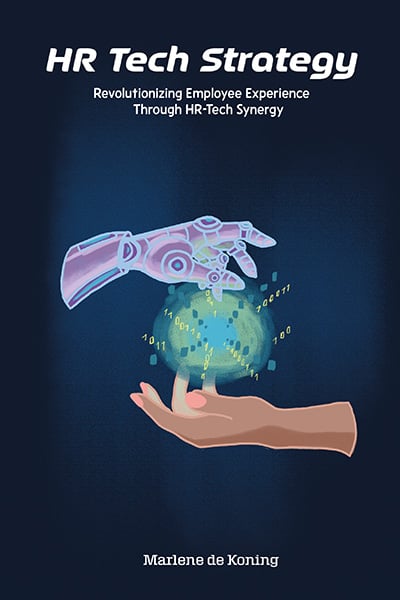
#4: HR Tech Strategy: Revolutionizing Employee Experience Through HR-Tech Synergy
Note: A Book preview from the title until page 23 plus „About the Author“ and the back cover is available on the website.
About theauthor:
„Marlene de Koning is a director of HR Tech & Data at PwC, where she leads a team of HR tech and data specialists, who help clients drive workforce transformation, create data driven strategies and implement innovative technologies.“
Source: Publisher
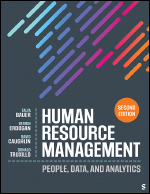
#5: Human Resource Management: People, Data, and Analytics
Image: Sage Publications (embedded)
Basic information:
Authors: Talya Bauer, Berrin Erdogan, David Caughlin, Donald Truxillo Publication date: 19/01/2024 Publisher: Sage Publications Language: English Pages: 600 Price (print): 125.68 Euro (Loose-leaf), 157.39 Euro (Paperback) Website: https://us.sagepub.com/en-us/nam/human-resource-management/book274799
Note: A table of contents of this second edition is available online on the website.
About theauthors:
You can find detailed information about the authors on the website.
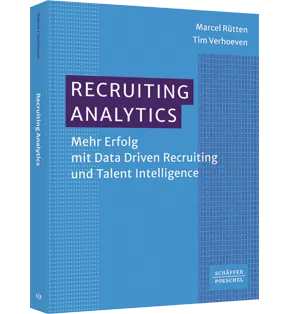
#6: Recruiting Analytics: Mehr Erfolg mit Data Driven Recruiting und Talent Intelligence
Image: Haufe (embedded)
Basic information:
Authors: Marcel Rütten, Tim Verhoeven Publication date: 02/01/2024 Publisher: Schäffer-Poeschel (part of Haufe Group) Language: German Pages: 168 Price (print): 49.99 Euro Website: https://shop.haufe.de/prod/recruiting-analytics
Note: The table of contents of the book is available online and as a PDF on the website.
About theauthors:
„Marcel Rütten has been working in HR management for over 15 years and is a widely known HR and recruiting expert as Global Talent Acquisition Lead, HR blogger and author. […]“
„Tim Verhoeven heads the Talent Intelligence team at Indeed in the DACH region and previously managed recruiting and personnel marketing at an international management consultancy. […]“
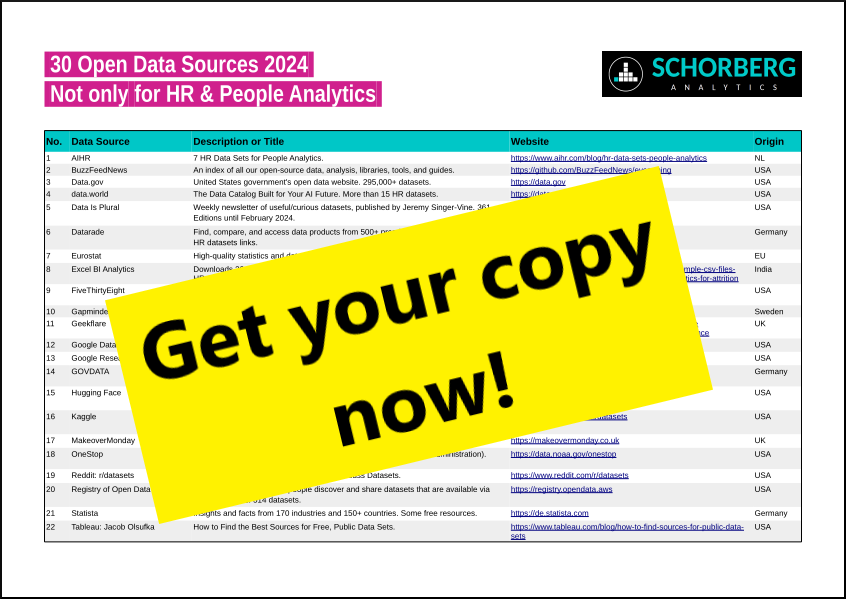
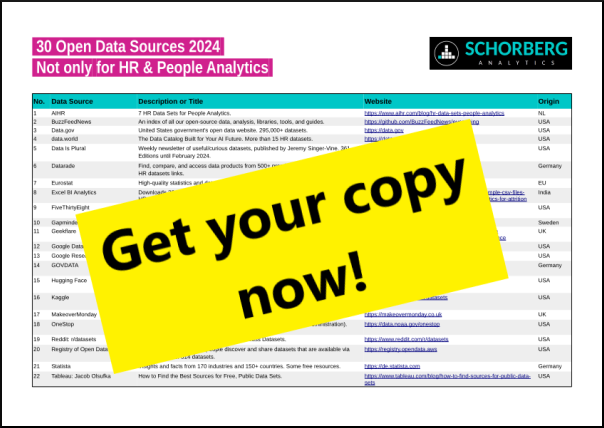
Image: First page of our list “30 Open Data Sources 2024 – Not only for HR & People Analytics.
Dear visitor!
Data are at the heart of our society, technology, and organizations. In fact without data, tools to collect and methods to analyze and interpret them our ancestors would not have been able to follow the traces of wild animals for food and to grow plants and breed animals later.
And in the course of this what later was named the First Agricultural Revolution (Neolithic Revolution) cities were build which led to further use of numbers: With taxation as one of the most important (and still is from the state points of view).
Tip: I have collected some important terms around data in German with links, so you might check this page out as well.
Exact and systematic observation of natural events, the collection of these data over a long period, thinking about these and developing theories, testing these with experiments as well as the exchange and correspondence with other researchers marked the start of the Scientific Revolution and its scientific method which paved the way to the Industrial and Digital Revolution on wich all our knowledge and wealth is based on until today.
„Standing on the shoulders of giants“, as Google often quotes, is as true as the onegoing efforts of many people today to solve the micracles of the universe and to answer open questions regarding our earth, our economy, and technological challenges.
Bricks without clay
„Data! data! data!“ he shouted impatiently. „I can’t make bricks without clay.“
These words come from the mouth of Sherlock Holmes and the short story „The Adventure of the Copper Bleeches“ by Arthur Conan Doyle, which was first published in The Strand Magazine in June 1892 – and which also appeared in the anthology „The Adventures of Sherlock Holmes“ in October of the same year.
But let’s the master detective from London himself speak:
Video: Created with D-ID based on an image from Stable Diffusion.
Although the famous detective from London is a fictional character, for his time and even today, his approach is a prime example of how to solve a difficult task, a puzzle and a case: through precise observation, the collection of data, scientific methods and logical reasoning (deduction). In other words, a forerunner of the data scientist!
And every data scientist or people analyst – like Sherlock Holmes – needs data! Data! Data! Fortunately, technological progress since the 1990s with hardware such as computers, chips, the internet, smartphones and increasingly powerful software has led to huge mountains of data from which the valuable „data ore“ now needs to be mined (technically: data mining).
Data as ores for knowledge and wisdom
Even if data does not have quite the same material significance as oil or gold, a comparison we read more often, it is still central to making decisions and translating results into action when it comes to the right selection, cleansing of raw data (interesting: similar to ore as a metal or mineral mixture and raw material), analysis and visualization.
Tip 1: See also the data science pyramid (DIKW) with the levels from bottom to top: World → Data → Information → Knowledge → Wisdom; (see e.g. Herter, 2022, „Was ist Data Science?“, p. 25, in Wawrzyniak & Herter (Eds.), Neue Dimensionen in Data Science: Interdisziplinäre Ansätze und Anwendungen aus Wissenschaft und Wirtschaft, Berlin – Offenbach: Wichmann/VDE). Note: Michael Herter is CEO of Bonn based data science company infas 360 GmbH.
Anyone who practices data science or people analytics (HR data science) therefore needs data. But where exactly does it come from? What sources are there? And how available is it?
Of course, organizations today primarily generate mass data (big data) as well as smaller amounts of data (small data): Here, data can be differentiated according to who or what it basically comes from and where it originates, such as:
Data from nature and agriculture (e.g. weather, soil, animals, plants)
Data from technical systems and machines (e.g. power plants, factories, vehicles)
Data from the economy, corporate management and the financial sector (macroeconomic figures, key business figures, taxes).
And what I am interested in as an HR data scientist or people analyst: data from people. More precisely: data from people in organizations – i.e. from employees, managers and trainees (HR data).
There are a number of other ways of classifying data, such as raw data, aggregated data or metadata, according to data type or file format or authorizations. However, it is important that such data classification takes place in accordance with the existing guidelines and is checked over time.
This is always personal data under data protection law, as is the case with customer data or patient data, which is subject to special legal protection.
Personal data also includes data that can be used to identify a person with reasonable effort, such as the license plate number, the account number or the personnel number, which are often used in databases as so-called primary and foreign keys.
Origin of data II: Internal sources
But let’s leave these information technology and legal aspects behind and return to the initial question: Where does the data come from?
Because as I said: (HR) data science and people analytics need to develop and implement solutions to HR challenges: Data.
Fortunately, a large amount of data is collected and stored within an organization today, which, together with other internal or external data, is available to the employee or external service provider for analysis.
Well, in the case of data science or people analytics projects, we usually have access to this data – even if it often involves a lot of effort, communication and processing; as well as to the relevant data sources of interest from business and human resources management such as databases, data warehouses or data lakes (or other modern architectures such as data lakehouses or data meshes). The relevant data is often also available as files (flat files) in various formats (e.g. cvs, xls, xml, json).
The development of data systems, the storage and use of data (transformation, extraction) is summarized under the term data engineering, which has led to the profession of data engineer, as the complexity of IT systems and the challenges posed by big data, IT system landscapes, software diversity and cyber security, for example, have grown significantly in the last 10 years.
The data from Human Resource Management (HR data for short) includes, for example, personnel master data and applicant data, wage and salary data, data on sick leave and fluctuation, data on qualifications and further training (e.g. e-learning) or on job satisfaction and employee management.
In the case of internal data from other areas of the company, HR data science and people analytics projects may be interested in communication data, company figures or working hours (e.g. overtime), depending on the issue at hand.
However, there are situations in which we do not have access to company data, but still need it for testing, training or demonstration purposes. What can we do? The solution: Public or open data!
Tip: For a comprehensive overview of these internal data sources and data from third parties (external data), see the short and practical reference book by Steffi Rudel (2021).
Origin of data III: External sources
There are a lot of external sources for data available which allow access of public or open data.
However, while there are many Internet offerings for a lot of data from politics, society, the environment, transport and health, to name but a few, real data on human resource management is very rare for obvious reasons of data protection and company secrecy.
However, there are some real and fictitious HR data sets that can be used for various purposes for data science and data analysis. For example, for practicing and learning, for testing hypotheses or for comparison with your own HR data.
External data from public, general and special sources with data on the labor market, employer ratings, customer satisfaction, demographic characteristics or the industry and market are also used for specific questions in an HR data science or people analytics project.
Image: First page of our list „30 Open Data Sources 2024 – Not only for HR & People Analytics.“
Schorberg Analytics and Stefan Klemens have collected 30 sources of public and open data in a PDF, which also contains links to a number of HR datasets: If you are interested in this collection contact Stefan Klemens via contact form, e-mail or LinkedIn message. [Please connect there and like three of my latest post, if you have not yet, or comment on it. Friends and supporters of Schorberg Analytics and Stefan Klemens get the PDF of course immediately!].
Bidl: Erstellt mit DALL·E von OpenAI (innerhalb von ChatGPT-4)
Zeitschriftentipp: Künstliche Intelligenz im Human Resource Management
Lieber Gast!
HRler kennen und schätzen es: Das Personalmagazin von Haufe. In der Ausgabe 3/2024 legt es den Schwerpunkt auf Künstliche Intelligenz – und den „verantwortungsvoller Umgang mit KI-Systemen“.
Cover der Ausgabe 3/2024 vom Personalmagazin (Graphik eingebettet).
Denn gerade bei dem Hype um Generative Artificial Intelligence (GenAI), natürlich auch im HRM, sind einordnende Berichte wichtig:
PS: Do you want to exchange ideas about human resource management, People Analytics, Digital Assessment, or Artificial Intelligence in HRM? Then network, send a message and/or schedule an online meeting. Or the classic way: a phone call.
And: Do you like my work and the content I regularly share? Then I’m happy about a Like or comment on LinkedIn. Thank you! ? ?♂️?
Image: Stefan Klemens working in the office (edited photo in cubistic style)
Dear guest!
In this newsblog post I am presenting you 32 HR tech conferences from our list of 130+ HR events (see the newsblog for more). The following list covers events from February until June 2024. Another newsblog article that is coming soon will focus on the second half of 2024.
Um Ihnen ein optimales Erlebnis auf dieser Website zu bieten, verwenden wir Technologien wie Cookies, um Geräteinformationen zu speichern und/oder darauf zuzugreifen. Wenn Sie diesen Technologien zustimmen, dann können wir Daten wie das Surfverhalten oder eindeutige IDs auf dieser Website verarbeiten. Wenn Sie Ihre Zustimmung nicht erteilen oder zurückziehen, können bestimmte Merkmale und Funktionen dieser Website beeinträchtigt werden oder fehlen.
Funktional
Immer aktiv
Die technische Speicherung oder der Zugang ist unbedingt erforderlich für den rechtmäßigen Zweck, die Nutzung eines bestimmten Dienstes zu ermöglichen, der vom Teilnehmer oder Nutzer ausdrücklich gewünscht wird, oder für den alleinigen Zweck, die Übertragung einer Nachricht über ein elektronisches Kommunikationsnetz durchzuführen.
Vorlieben
Die technische Speicherung oder der Zugriff ist für den rechtmäßigen Zweck der Speicherung von Präferenzen erforderlich, die nicht vom Abonnenten oder Benutzer angefordert wurden.
Statistiken
Die technische Speicherung oder der Zugriff, der ausschließlich zu statistischen Zwecken erfolgt.Die technische Speicherung oder der Zugriff, der ausschließlich zu anonymen statistischen Zwecken verwendet wird. Ohne eine Vorladung, die freiwillige Zustimmung deines Internetdienstanbieters oder zusätzliche Aufzeichnungen von Dritten können die zu diesem Zweck gespeicherten oder abgerufenen Informationen allein in der Regel nicht dazu verwendet werden, dich zu identifizieren.
Marketing
Die technische Speicherung oder der Zugriff ist erforderlich, um Nutzerprofile zu erstellen, um Werbung zu versenden oder um den Nutzer auf einer Website oder über mehrere Websites hinweg zu ähnlichen Marketingzwecken zu verfolgen.